Risk Assessment, step 3

This risk tool post is about the third step in a risk assessment, so if you haven't read the first two post, we recommend you read the first post to find out why it is so important to do a risk assessment in your organization and how to get started! 

Step 3: Develop strategies to reduce risk and vulnerability   


Once the threats have been identified and evaluated, and the risks rated, the next step is to consider what can be done to reduce risks to an acceptable level. Developing security strategies is a critical step in ensuring that before committing staff, resources and the firm’s reputation, the firm has taken all reasonable steps to minimize the risk.   
In general, there are two possible courses of reducing exposure to risk:
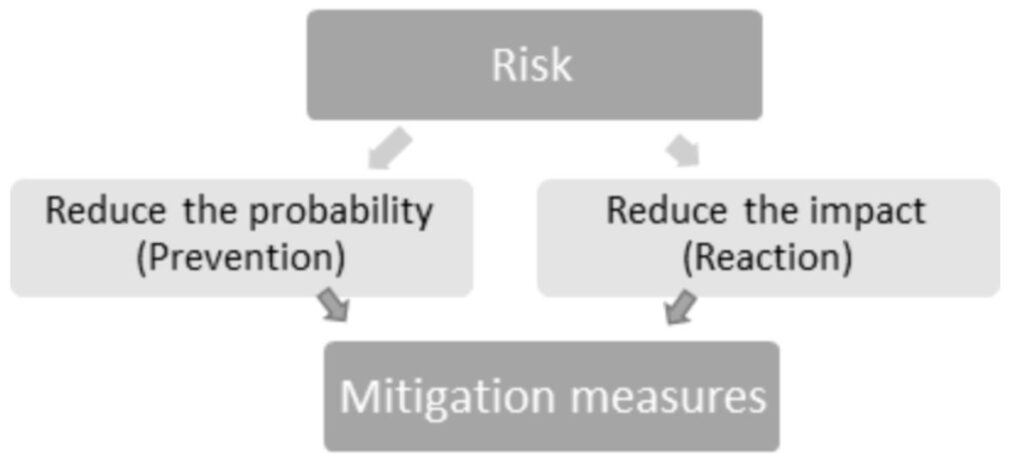
Mitigation measures to reduce risk should focus on both prevention (reduce the probability) and reaction (reduce the impact). By doing this, you can reduce the level of residual risk from the level originally assigned to each threat identified, and thereby improve your ability to deliver your program.   

For example, we could reduce the exposure the to the risk of spreading with COVID-19 by:

Sources:   
Damon P. Coppola (2015) “Introduction to international disaster management”  

European interagency security forum (2020) “Security to go: A risk management toolkit for humanitarian aid agencies 

Humanitarian Practice Network (2010) “Good practice review – Operational security management in violent environment” 

About the Author

admin_RoC

mail@carstensoelund.com

Other articles:

Simple Investigation Method Analysis
The Simple Investigation Method Analysis or abbreviated SIM Analysis, is primarily used as a reactive tool, applied to investigate the cause of an incident. The SIM Analysis model can be seen as a risk-orientated evolvement of the five why technique, which is used in a variety of contexts.  In addition to the classic investigative purpose …
Risk Data Quality Assesment
Every risk analysis is performed using certain data and information. These critical inputs must adhere to a high standard of credibility, precision, and impartiality. After all, if the risk analysis iso be trusted, its foundation—the data—must be equally reliable. By employing risk data quality assessment, project managers can evaluate the credibility, quality, accuracy, and ease …
Risk Education
Have you considered black swans in your planning?
What are black swans?  Every project will run into problems and unexpected risks. No matter how much you plan, these issues will arrive. They often come in different sizing from minor to devastating. Often the minor problems can be solved by carefully laid out contingency plans and great planning. However greater risks and problems can become …

GET IN TOUCH

Feel free to contact us

for more information

+45 28 60 49 50

contact@rocconsult.eu

JOIN OUR NEWSLETTER

Our core business is rehearsing

excellence in your project


RoC Drill is used by:

RoC Consult ApS - All rights reserved.

We use cookies to allow us to better understand how the site is used. By continuing to use this site, you consent to this policy. Click to learn more