

Risk In Complex Operations
Risk Management Tools
Simplifying risk management
Providing risk management tools for better and simpler risk management.
Risk Education
Teaching through examples
We post examples of projects with
different risk scenarios and analyse what went wrong.
Read the latest RICO post
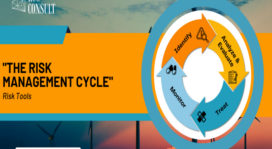
The Risk Management Cycle
Introduction: The risk management cycle is a model organizations and project managers use and is fundamental to their risk management framework. This cycle includes the steps taken to reduce risk and can be modified according to the needs of the organization or project. The risk management cycle featured in this article will focus on four …
The Risk Management Checklist: One of Many Tools
Introduction: Every day, whether as an individual or a large organization, people are forced to deal with risks. Risks come in many different forms, but the solution to managing those risks may vary depending on the situation. Fortunately, there are tools that risk managers at all levels can use to help them simplify their processes, …
Continue reading "The Risk Management Checklist: One of Many Tools"

Preparedness at the Individual Level
Preparedness Starts with You! Risk is everywhere. From the moment you get in your car to go to work until the moment you swallow your last midnight snack before bed, you encounter different risks of different severities. It is also becoming increasingly obvious that both the number and severity of emergencies and disasters people face …
risk management
It does not have to be time consuming, complicated and expensive. But unfortunately it is most of the time… Especially in complex projects!
That is why we use risk management tools!
In risk management there is a number of tools, or methods, one can use to identify, rate and mitigate risk. These methods are a combination of simple and inexpensive ones, such as a brainstorming exercise. To the more complicated, expensive and time consuming ones, such as organisational risk governance and organisational risk communication.
The latest about risk management tools

Bow-Tie Diagram
Used extensively by the Maersk organisation, this tool is a powerful one if used correctly. It can be difficult to grasp but is quite logical once understood. Read more to find out...

Capacity assessment
Does your organisation have the capacity to handle unforeseen risk or even disasters? Are you preventive or reactive when it comes to risk management? Read more to find out...

The wonderful risk matrix
The risk matrix is the crème de la crème of risk management and specifically, rating risk(s). This tool is useful for all types of cases whether travel safety, chemical safety or something entirely different.
Educational Examples
With educational examples, our goal is to present the reader with situations or projects where a risk became an incident. By analysing what went wrong and what should have been done, we can hopefully provide valuable knowledge to the reader.
What went wrong
In these educational examples we present a case where a specific project or part of the projects have gone wrong. We try to examine where the “point-of-no-return” is (i.e., where the risk became an incident).
What should have been done
Then, when we know where the project went wrong, we will go back in time before the “point-of-no-return” and see what could have been done differently to avoid the risk becoming an incident.
What can we learn
By doing so, we can provide valuable knowledge and “experience” to, hopefully, get your critical thinking going, so you can avoid the same incidents in your projects!
The latest about our risk education content

NAT and HRO; Summary
Are accidents inevitable or are they preventable? This post is a summary and a discussion of NAT and HRO. Click here to read more..
NAT and HRO; HRO
Are accidents inevitable or are they preventable? This post is about High Reliability Organization (HRO). Click here to read more..
NAT and HRO; NAT
Are accidents inevitable or are they preventable? This post is about Normal Accident Theory (NAT). Click here to read more..
GET IN TOUCH
Feel free to contact us
for more information
+45 28 60 49 50
contact@rocconsult.eu
JOIN OUR NEWSLETTER


Our core business is rehearsing
excellence in your project
RoC Drill is used by:


RoC Consult ApS - All rights reserved.