

Risk In Complex Operations
Risk Management Tools
Simplifying risk management
Providing risk management tools for better and simpler risk management.
Risk Education
Teaching through examples
We post examples of projects with
different risk scenarios and analyse what went wrong.
Read the latest RICO post
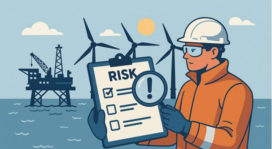
Introduction to Human Reliability Analysis (HRA)
Humans play a vital role in the design, management, maintenance, and operation of technical systems, within the execution and planning of large and complex operations. Humans tend to make mistakes and are generally more complex than technical systems, which makes it difficult to predict and prevent the types of mistakes they might make. It is …
Continue reading "Introduction to Human Reliability Analysis (HRA)"

Risk Perception, The Psychometric Paradigm, and how media can affect us
What is risk perception: In the 1970s and 1980s, researchers Paul Slovic, Baruch Fischhoff, and Sarah Lichtenstein conducted several studies on the differences between expert and laypeople’s perceptions of risk. The at that time new ideas concluded that people experience risk subjectively, influenced by personal preferences, knowledge, and life experiences. This contrasts with the objective …
Continue reading "Risk Perception, The Psychometric Paradigm, and how media can affect us "

How to categories risk impact
What is risk impact: Risk impact refers to the potential consequences and effects of a materialise risk. This is an important part of risk assessment and risk management. A risk can be defined in various ways. One such definition, provided by Breck, describes risk as the product of two factors: Risk = Likelihood X Consequence. …
risk management
It does not have to be time consuming, complicated and expensive. But unfortunately it is most of the time… Especially in complex projects!
That is why we use risk management tools!
In risk management there is a number of tools, or methods, one can use to identify, rate and mitigate risk. These methods are a combination of simple and inexpensive ones, such as a brainstorming exercise. To the more complicated, expensive and time consuming ones, such as organisational risk governance and organisational risk communication.
The latest about risk management tools
Event Tree Analysis
ETA, also known as event tree analysis, is a systematic method used when trying to analyze accidents. This is done by breaking them down into a series of events. When doing ETA, you must start with an event called a “initiating event”. These will often refer to equipment failure, human error etc. From this initiating …

ALARP
Eliminating every single risk in a complex operation is impossible, in fact even in simple projects you can never predict or eliminate all risks. This means that you must accept a certain level of risk. Determining whether a risk is acceptable or not can be difficult though. A lot of factors can affect perception of …
Educational Examples
With educational examples, our goal is to present the reader with situations or projects where a risk became an incident. By analysing what went wrong and what should have been done, we can hopefully provide valuable knowledge to the reader.
What went wrong
In these educational examples we present a case where a specific project or part of the projects have gone wrong. We try to examine where the “point-of-no-return” is (i.e., where the risk became an incident).
What should have been done
Then, when we know where the project went wrong, we will go back in time before the “point-of-no-return” and see what could have been done differently to avoid the risk becoming an incident.
What can we learn
By doing so, we can provide valuable knowledge and “experience” to, hopefully, get your critical thinking going, so you can avoid the same incidents in your projects!
The latest about our risk education content

What Are the Different Goals of Risk Mitigation?
There is risk in every stage of a wind farm project, and these risks can lead to both minor and dire consequences. The outcome of not identifying risks and not implementing proper mitigation, can lead to greater hazards for workers, financial consequences and significant impacts on the project timeline. Investing resources in mitigation would be …
Continue reading "What Are the Different Goals of Risk Mitigation? "

Scenario Analysis
Scenario analysis is a strategic planning method used to make flexible long-term plans. It is particularly valuable for managing uncertainty and risk by exploring and evaluating possible future events or conditions. What is Scenario Analysis? Scenario analysis is about developing and analyzing different possible scenarios that describe potential future events. Each scenario represents a set …

Risk Breakdown Structure (RBS)
In project management it is important to identify and manage risks effectively for a successful delivery of the project. A tool for this is the risk breakdown structure, also called RBS. Risk breakdown structure is a hierarchical representation of risks by their categories and subcategories. It organizes potential project risks into a more structural form, …
GET IN TOUCH
Feel free to contact us
for more information
+45 28 60 49 50
contact@rocconsult.eu
JOIN OUR NEWSLETTER


Our core business is rehearsing
excellence in your project
RoC Drill is used by:


RoC Consult ApS - All rights reserved.